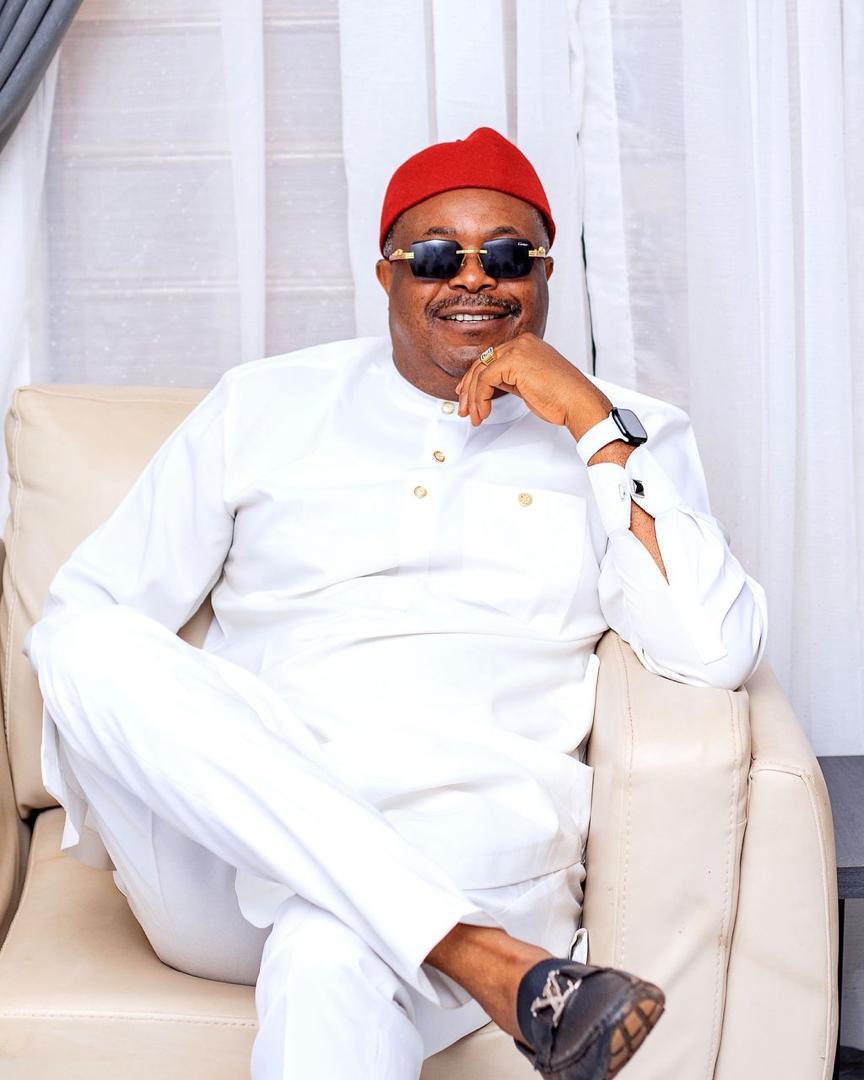
I listened with disbelief to reports that former Delta State Governor, Dr. Ifeanyi Okowa, visited the Economic and Financial Crimes Commission seeking the release of his international passport so that he could travel abroad to attend to medical issues. His passport had remained with the EFCC following his earlier arrest and questioning.
And I asked myself: what kind of country have we built?
Dr. Okowa governed Delta State for eight years—from 2015 to 2023. He is himself a medical doctor. Yet after eight years presiding over one of Nigeria’s major oil-producing states, he needed to leave the country when his own health required attention.
That contradiction should trouble every Nigerian, irrespective of party affiliation.
The question is bigger than one man. It goes to the heart of the Nigerian leadership tragedy: Why should those entrusted with billions in public resources govern for years, yet leave behind public institutions they apparently cannot confidently entrust with their own lives?
The irony becomes even more disturbing against the background of the enormous corruption allegations surrounding Okowa’s administration.
The EFCC has investigated allegations concerning approximately ₦1.3 trillion in 13 per cent derivation funds received by Delta State during his tenure.
Separately, recent reports citing details of an EFCC investigation have raised allegations involving approximately ₦96 billion in cash withdrawals from an account associated with the Delta State Government House Protocol Department.
The scale of the figures forces an unavoidable public-policy question.
Imagine what resources of such magnitude, if available and properly deployed for the people, could accomplish.
They could help establish a genuinely world-class specialist hospital in Delta State—one capable of attracting internationally trained doctors and providing advanced oncology, cardiology, neurosurgery, renal care, emergency medicine and modern diagnostic services.
They could rehabilitate enormous stretches of deteriorating roads and bridges.
They could equip primary and secondary healthcare facilities across the state.
They could provide meaningful skills programmes, scholarships, enterprise funding and social safety nets for thousands of young people struggling with unemployment and poverty.
It could provide house for low income homeless families.
They could transform schools.
They could improve water systems.
They could build institutions that would continue saving lives long after every governor, commissioner and political appointee had left office.
That is why the reported request to travel abroad for medical care carries such enormous symbolism.
Who built the hospitals abroad to which Nigerian political leaders routinely travel?
They were built by societies that understood a simple principle: public money must ultimately serve the public.
Those countries invested taxpayers’ money in hospitals, laboratories, research, equipment, doctors, nurses, roads, emergency services and functioning institutions. Nigerian leaders then travel to enjoy the very systems that disciplined public administration created elsewhere.
Meanwhile, Nigerians die from conditions that are treatable. Women die in childbirth. Accident victims perish because emergency care is inadequate. Families sell property to pay medical bills. Doctors and nurses migrate in search of better working conditions.
There is another aspect of Dr. Okowa’s recent political reflections that makes the matter even more unsettling.
In September 2026, presidential contest in which he ran as Atiku Abubakar’s vice-presidential candidate: “I knew we would not win the election.” He reportedly said he had even predicted that the APC would finish first, the PDP second and Labour Party third. (TheNiche)
That admission raises legitimate questions of political judgment and accountability.
If a candidate genuinely believed beforehand that his presidential ticket would lose, citizens are entitled to ask why so much political energy, public influence and resources were committed to that project. More importantly, where allegations exist that state resources may have been misused during the same political period, investigators and the courts should establish the facts transparently rather than leave Nigerians with rumours, accusations and unanswered questions.
No allegation should substitute for evidence, and no political defection, friendship or influence should substitute for due process.
But neither should Nigerians stop asking questions.
Leadership is not an opportunity to become wealthy enough to escape the consequences of a collapsing society. Leadership is an opportunity to build a society from which nobody needs to escape.
When death eventually comes—as it comes for governors and labourers, billionaires and beggars alike—no one carries a bank account into eternity. No convoy accompanies anyone into the grave. No mansion negotiates with mortality. No political title buys another breath.
The greater legacy is the hospital still saving lives when you are gone.
The road on which children travel safely decades after you leave office.
The school educating generations you will never meet.
The jobs created for young people who might otherwise have been abandoned to poverty, crime or despair.
And the institutions strong enough to serve both the powerful and the powerless.
As I would put it:
“The tragedy of leadership is not that a man dies without taking his wealth with him; it is that a society may continue dying because he failed to use power to build what would outlive him.”
Dr. Okowa, like every human being, is entitled to seek the best medical treatment available to him. His health should never be a subject of mockery.
But the reported circumstances surrounding his request for his passport should compel Delta State—and Nigeria—to confront a far deeper question:
Why should people who governed our states for years still need foreign hospitals when their own lives are at stake?
Until Nigerian leaders can confidently enter the hospitals they supervised, travel on the roads they commissioned, send their families to institutions sustained by the systems they governed, and live under the same conditions endured by ordinary citizens, the contradiction at the heart of Nigerian leadership will remain painfully visible.
A country should not merely produce leaders wealthy enough to escape its failures.
It should produce leaders determined enough to fix them.
Chris Okobah PhD
Award winning author
Please share this article if you believe that a new Nigeria is possible.
About the Author