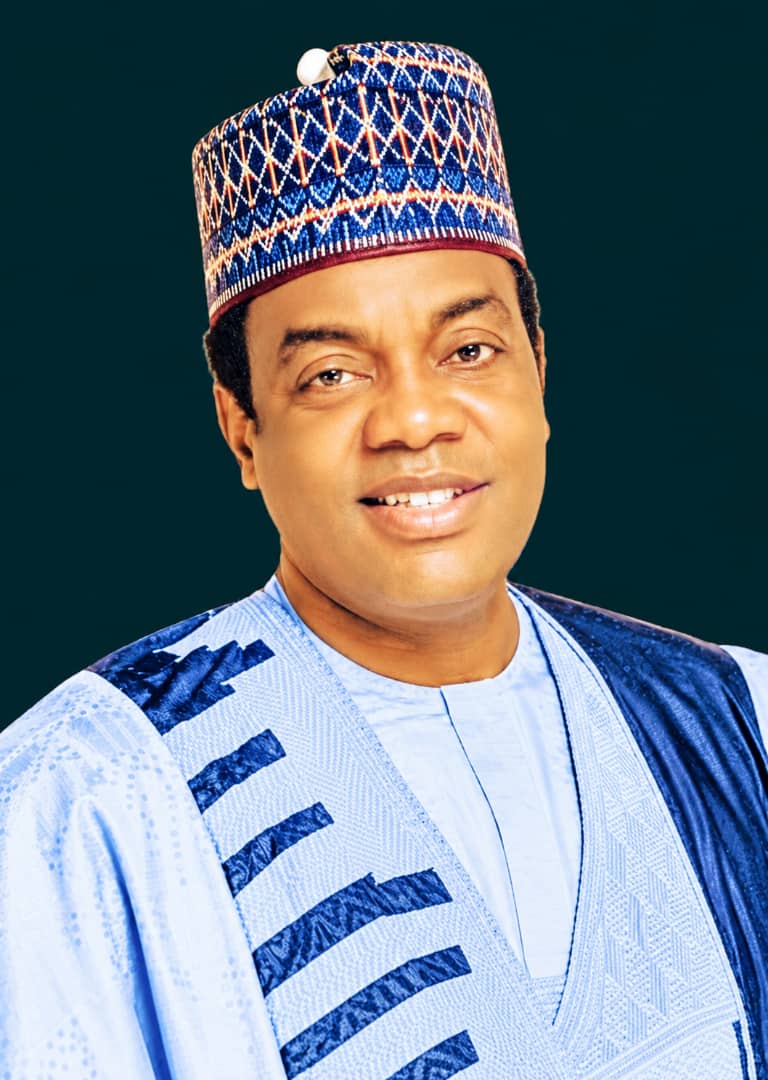
– Donald Duke, the presidential candidate with an unequalled record
By Charles Edet Esq., Fcr
The emergence of former Cross River State Governor Donald Duke as the presidential candidate of the Peoples Redemption Party, PRP, has brought one of Nigeria’s most recognisable former governors back into the centre of the national political conversation, at a time when Nigerians are increasingly demanding measurable records rather than political rhetoric.
Duke governed Cross River State from 1999 to 2007, during the formative years of Nigeria’s Fourth Republic. That era produced governors whose records remain subjects of public discussion more than two decades later, including Bola Ahmed Tinubu in Lagos State, Donald Duke in Cross River State and Chimaroke Nnamani in Enugu State.
For Duke’s supporters, his strongest political argument may be found not in promises about tomorrow but in what they regard as his record yesterday. His eight years in Cross River were associated with an ambitious attempt to reposition a relatively quiet state on Nigeria’s geographical fringe into a nationally and internationally recognised destination for tourism, hospitality, entertainment and investment.
Calabar became the centrepiece of that transformation. Duke’s administration invested substantially in urban renewal, environmental aesthetics, tourism development and destination marketing while pursuing projects and programmes intended to give Cross River an economic identity beyond conventional government revenue.
Perhaps the most enduring expression of that vision is Carnival Calabar, introduced during his administration and subsequently promoted as “Africa’s Biggest Street Party.” The annual celebration developed into one of Nigeria’s most recognisable tourism and cultural events and helped propel Calabar into national and international consciousness.
His administration was also associated with the development and promotion of the Obudu Mountain Resort, Obudu International Mountain Race, Tinapa Business and Leisure Resort, Marina Resort and other tourism-related initiatives. Duke’s governing philosophy was straightforward but ambitious: if Cross River was not situated on Nigeria’s busiest commercial routes, government could create compelling economic and recreational reasons for Nigerians, investors and international visitors to travel there.
It was an attempt to transform geography into opportunity.
Tourism under Duke was conceived as more than recreation. It was promoted as an economic instrument capable of stimulating hotels, restaurants, transportation, entertainment, small businesses and employment while establishing a distinctive identity for Cross River.
Duke demonstrated an appetite for ambitious projects capable of altering perceptions about what a subnational government could attempt. Rather than accept Cross River’s economic limitations as permanent, his administration sought alternative engines of growth and visibility, with emphasis on tourism infrastructure, destination marketing, urban renewal and private-sector participation.
Long after Duke left Government House, Calabar’s association with tourism and Carnival Calabar remained embedded in Nigeria’s popular consciousness. That enduring identity illustrates an important principle of economic development: governments do not merely construct roads and buildings; they can deliberately create economic identities around culture, geography, agriculture, technology, entertainment and tourism.
Duke attempted precisely that.
He wanted Cross River to possess an identity capable of attracting people, attention, investment and commercial activity.
His presidential ambition is not new. Duke sought the PDP presidential nomination ahead of the 2007 general election and subsequently contested the 2019 presidential election under the Social Democratic Party. His emergence on the PRP platform has returned him to national politics as Nigerians debate economic hardship, unemployment, insecurity, productivity and the country’s development direction.
His recent intervention on Nigeria’s economy provides an important insight into his current thinking. In remarks reported in September 2026, Duke identified low productivity as a fundamental driver of Nigeria’s poverty and economic hardship.
His argument is that Nigeria’s population and consumption requirements have expanded enormously without a corresponding expansion in productive capacity. He contends that national progress cannot simply be celebrated through increasingly large budgets when productivity, employment, purchasing power and living standards remain fundamental concerns.
It is an argument that goes directly to the heart of Nigeria’s economic dilemma: how does Africa’s most populous country transform its enormous human population into an equally formidable productive force?
The developing 2027 presidential contest also presents Nigerians with politicians whose previous public responsibilities can be examined rather than merely imagined.
President Bola Ahmed Tinubu governed Lagos State for eight years before becoming President of Nigeria. Donald Duke exercised direct executive authority as governor of Cross River for eight years. Peter Obi similarly served as governor of Anambra State, while Atiku Abubakar served for eight years as Nigeria’s Vice President.
Those offices carried different constitutional powers and responsibilities and should therefore be compared carefully. Duke’s supporters can point to the visible tourism, urban-renewal and destination-development initiatives associated with his Cross River administration. Tinubu can be assessed on both his Lagos record and current presidency; Obi on his stewardship of Anambra State; and Atiku on his vice-presidential tenure and other public engagements.
Rather than reducing the contest to political assertions about which individual is superior, Nigerians have an opportunity to interrogate the evidence themselves.
What did each accomplish when entrusted with public responsibility? What industries were stimulated? What institutions were strengthened? What sustainable employment opportunities resulted from their policies? What are their respective strategies for electricity, security, education, healthcare, industrialisation and agricultural productivity?
Most importantly, how does each propose to transform Nigeria from an import-dependent and consumption-heavy economy into a productive, competitive nation capable of creating prosperity for its rapidly expanding population?
These are questions that should define the 2027 presidential conversation.
Duke enters that conversation with eight years of executive experience and a recognisable development philosophy. His Cross River years were associated with an ambitious attempt to reposition the state through tourism, urban renewal, hospitality, entertainment and investment promotion. His more recent emphasis on productivity suggests that his national economic argument will substantially revolve around creating an environment in which Nigerians can produce, work, invest and generate sustainable wealth.
The 2027 campaign should therefore provide the forum for Duke, Tinubu and other presidential candidates to defend their records, explain their programmes and answer difficult questions about Nigeria’s future.
Nigeria’s presidency is too consequential to be determined merely by political noise, ethnic arithmetic, propaganda or the size of campaign machinery. Records, ideas, experience, programmes and measurable plans deserve rigorous public examination.
Donald Duke has returned to the national political stage carrying something Nigerians can interrogate: eight years of executive history in Cross River State and a development philosophy whose physical and cultural footprints remain part of the state’s contemporary identity.
Ultimately, Nigerians will determine what weight that record should carry when they make their choice in 2027.
About the Author