The Greatest Tragedy Is Not Oppression—It Is Defending the Oppressor
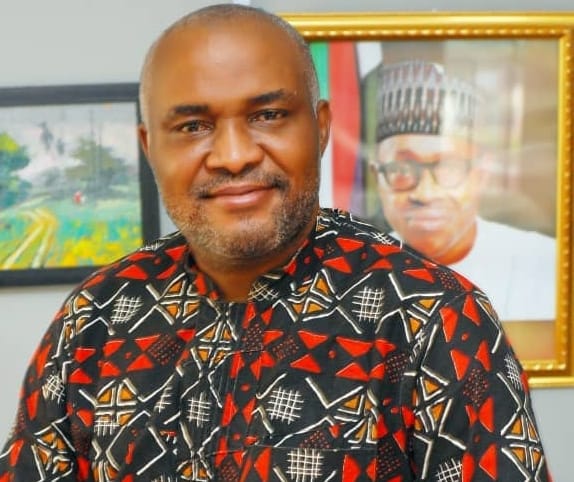
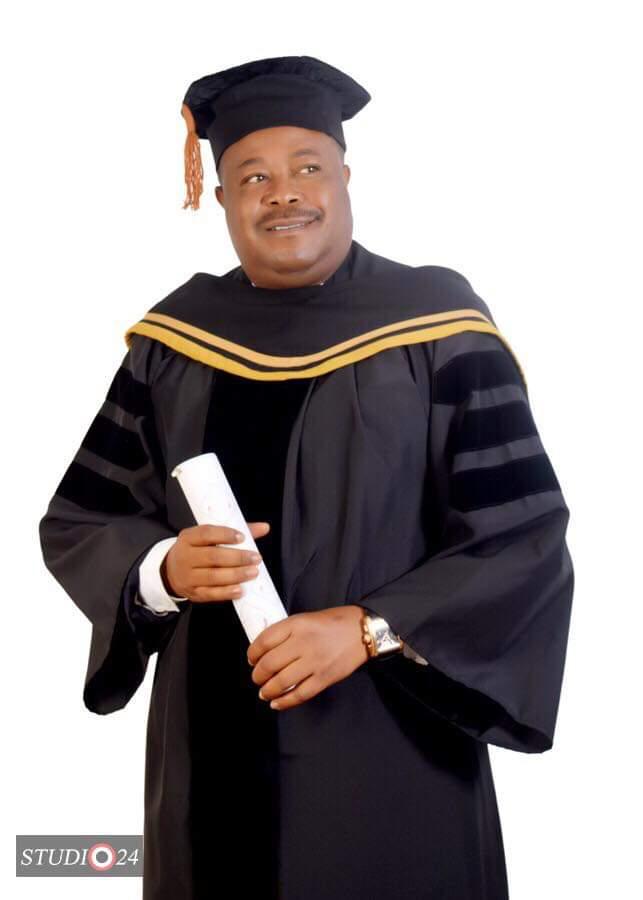
By Chris Okobah, PhD
History records many tragedies.
It remembers nations conquered by foreign armies. It remembers cities reduced to rubble. It remembers civilizations destroyed by famine, war, and disease.
But perhaps the greatest tragedy history has ever witnessed is when a people become so accustomed to oppression that they no longer recognize it. They begin to mistake bondage for security, suffering for normalcy, and silence for peace.
There is no prison more difficult to escape than the one constructed inside the human mind.
When a captive begins to admire his captor, the prison door no longer needs a lock.
That is the danger confronting every democracy whose citizens abandon critical thinking and surrender their judgment to blind political loyalty.
Nigeria today is blessed beyond measure. Few countries possess such abundant natural resources, fertile land, youthful energy, entrepreneurial talent, and cultural richness. By every natural measure, Nigeria should stand among the world’s most prosperous nations.
Yet millions struggle to afford food.
Parents lie awake wondering how to educate their children.
Graduates wander the streets carrying certificates that have become little more than pieces of paper.
Hospitals lack essential equipment. Schools deteriorate. Roads become death traps. Insecurity robs families of peace, businesses of confidence, and communities of hope.
These hardships deserve honest public debate and accountable leadership. But democracy cannot function if citizens stop asking questions or excuse failure simply because it comes from those they support.
The deepest wound of any nation is not merely bad leadership.
It is when citizens become emotionally invested in defending the very conditions they long to escape.
The greatest triumph of oppression has never been the strength of the oppressor.
It has always been the surrender of the oppressed.
Frederick Douglass understood this truth when he declared:
“Power concedes nothing without a demand. It never did and it never will.”
Freedom has never been donated.
Justice has never been distributed as charity.
Progress has never been achieved by applause for failure.
Every society that advanced did so because ordinary citizens found the courage to demand something better.
The United States confronted slavery.
South Africa confronted apartheid.
India confronted colonial rule.
The Berlin Wall fell because countless people refused to believe that division was their permanent destiny.
History changes when citizens decide that enough is enough.
But history also warns us of another uncomfortable truth.
No corrupt system survives by the efforts of the powerful alone.
Every unjust system depends upon ordinary people willing to excuse it, defend it, normalize it, or remain silent before it.
That is why blind political loyalty is one of democracy’s greatest enemies.
When tribe becomes more important than truth…
When party becomes more important than principle…
When personalities become more important than performance…
Democracy slowly begins to die.
A citizen who refuses to evaluate leaders honestly does not strengthen democracy.
He weakens it.
He exchanges the dignity of citizenship for the comfort of unquestioning allegiance.
The Roman philosopher Cicero warned:
“The welfare of the people shall be the supreme law.”
Government exists for the people—not the other way around.
Public office is a sacred trust.
Leadership is a responsibility.
Power is a temporary stewardship.
Whenever these truths are forgotten, nations drift toward decline.
Martin Luther King Jr. reminded humanity:
“Our lives begin to end the day we become silent about things that matter.”
Silence is dangerous.
But something can be even more dangerous than silence.
Celebrating failure.
Defending injustice.
Mocking those who ask difficult questions.
Attacking those who demand accountability.
That is how societies gradually normalize decline.
No nation becomes prosperous because its citizens worship politicians.
Nations become prosperous because citizens insist that every leader—regardless of name, party, religion, or ethnicity—be accountable for the trust placed in them.
The ballot is not a gift to politicians.
It is the people’s instrument of accountability.
Every vote carries the hopes of unborn generations.
Every election determines whether public resources will be transformed into schools or squandered through waste, whether hospitals will save lives or leave patients helpless, whether roads will unite communities or remain symbols of neglect.
The future of a nation is shaped not only by those who govern but also by those who choose whom to entrust with power.
As Nelson Mandela wisely observed:
“To be free is not merely to cast off one’s shackles, but to live in a way that respects and enhances the freedom of others.”
Political freedom means little without intellectual freedom.
The courage to question.
The courage to disagree.
The courage to reject propaganda.
The courage to place the national interest above personal, ethnic, or partisan attachment.
Nigeria does not lack intelligent people.
Nigeria does not lack natural wealth.
Nigeria does not lack resilient citizens.
What the nation desperately needs is a civic culture in which loyalty to the Constitution is greater than loyalty to personalities, where truth is valued above propaganda, and where accountability is demanded from every public servant.
Every generation receives one defining question.
Will we leave our children a nation stronger than the one we inherited?
Or will we hand them a country burdened by the consequences of our own silence, our own complacency, and our own unwillingness to hold power accountable?
The answer will not be written by politicians alone.
It will be written by every citizen who enters a polling booth.
By every citizen who speaks when truth is unpopular.
By every citizen who refuses to exchange conscience for convenience.
History has never been transformed by people who admired their own shackles.
It has always been transformed by those who found the courage to break them.
“The most dangerous prison is not built with iron bars; it is built when a people surrender their ability to question those who govern them.” — Chris Okobah, PhD
Award winning author
About the Author