
By Odita Sunday
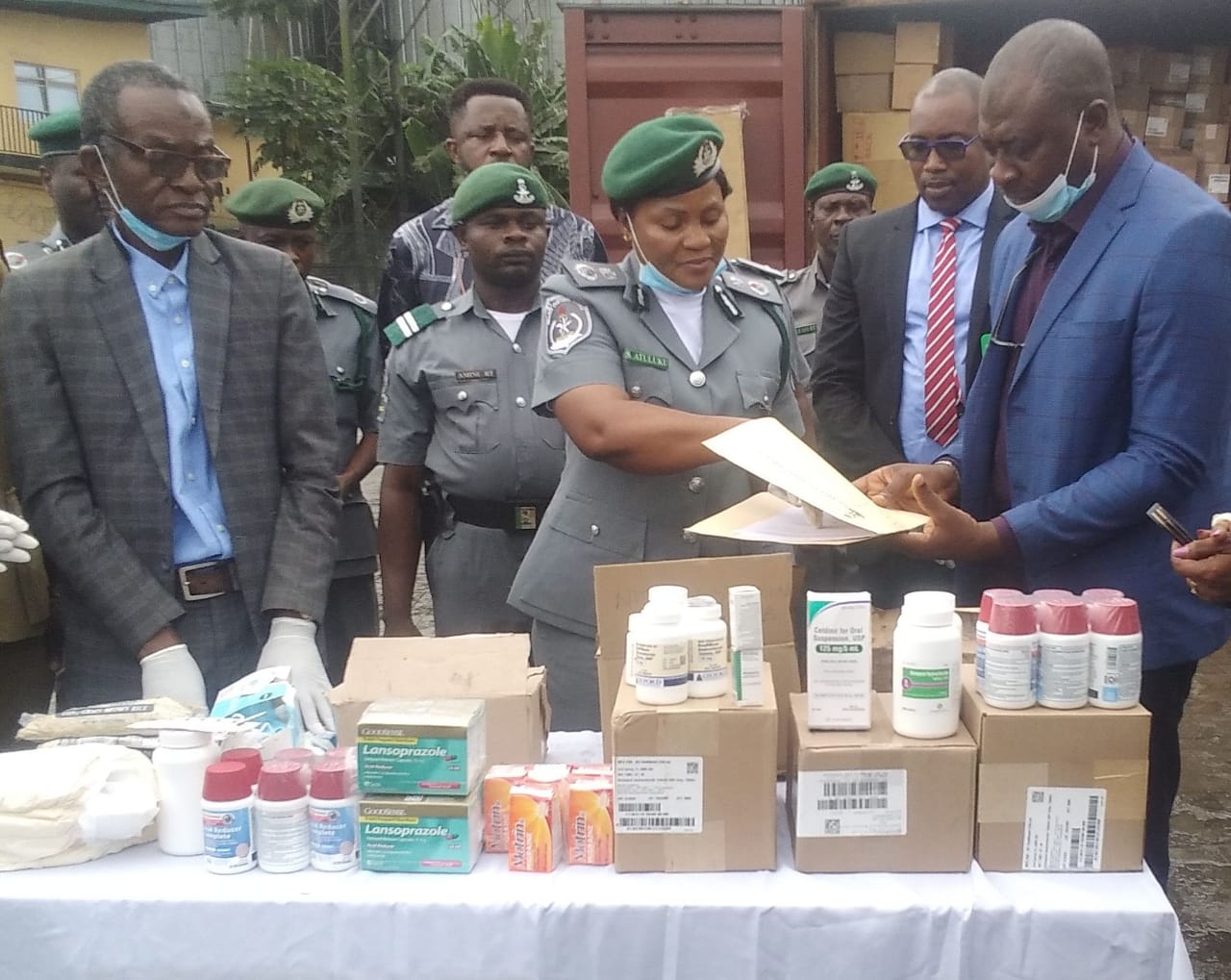
The National Agency for Food and Drug Administration and Control (NAFDAC) has taken custody of a consignment of expired pharmaceutical products intercepted by the Nigeria Customs Service (NCS) at the Port Harcourt Area I Command for regulatory action and safe disposal.
Receiving the seized products on behalf of NAFDAC, the Deputy Director, Port Inspection Directorate, Pharm. Adepoju Bayo Raufu, commended the Customs Service for its vigilance, professionalism and continued collaboration with the agency in protecting Nigerians from the dangers associated with expired and harmful pharmaceutical products.
Raufu assured that NAFDAC would immediately commence the necessary regulatory procedures to ensure the safe disposal of the expired products in line with relevant laws, regulations and established safety protocols.

The NAFDAC official said the seizure underscored the importance of sustained inter-agency cooperation in preventing dangerous pharmaceutical products from entering the Nigerian market.
Also speaking, the Zonal Director, NAFDAC South-South Zone, Pharm. Chukwuma Oligbu, described the handover as a demonstration of the strong working relationship between NAFDAC and the Nigeria Customs Service.
Oligbu commended the Customs Area Controller, Port Harcourt Area I Command, Comptroller Salamatu Atuluku, and her officers for their professionalism, diligence and commitment to protecting public health.
He called for stronger collaboration among regulatory, security and enforcement agencies to curb the importation and circulation of expired, substandard and unsafe pharmaceutical products in the country.

The exercise culminated in the formal handover of the intercepted pharmaceutical products and relevant documentation by the Customs Service to NAFDAC for appropriate regulatory action and safe disposal.

The development, the agencies said, further reaffirmed their commitment to strengthening border controls, protecting public health and ensuring that only safe, genuine and duly regulated pharmaceutical products are allowed into Nigeria through the nation’s ports.
About the Author