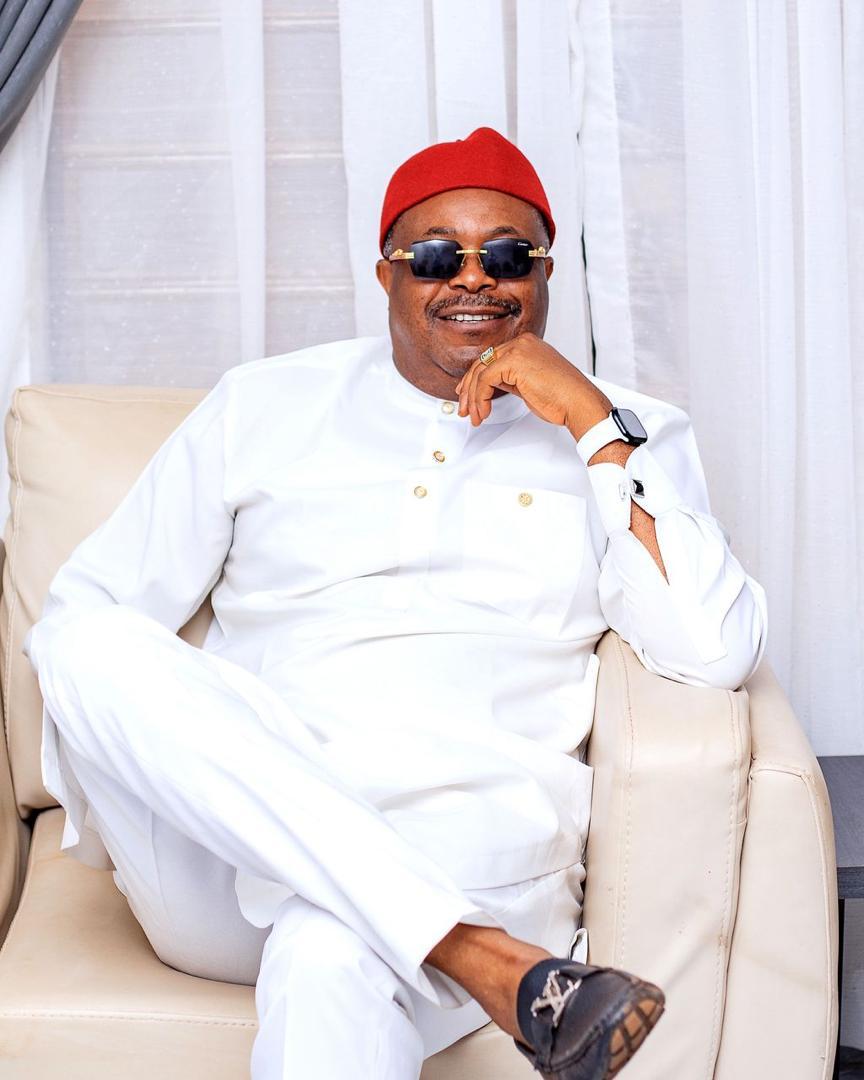
By Chris Okobah, PhD
“Facts are stubborn things.” — John Adams
There comes a moment in the life of every society when the greatest threat is no longer poverty, insecurity, or corruption. It is the normalization of mediocrity masquerading as excellence, propaganda masquerading as performance, and strategic incompetence masquerading as leadership.
Nigeria appears to have arrived at that moment.
It may sound like a comical parody, but it is the tragic reality confronting millions of Nigerians. We now live in an environment where political spin is elevated above substance, carefully choreographed narratives are expected to replace measurable achievements, and citizens are repeatedly asked to applaud statistics while their daily lives tell an entirely different story.
As Abraham Lincoln wisely observed:
“You can fool all the people some of the time, and some of the people all the time, but you cannot fool all the people all the time.”
The Governor of Delta State recently asserted that his administration has generated more Internally Generated Revenue (IGR) than any previous government in the state’s history. If that claim is accurate—and every public claim deserves public scrutiny—then the inevitable question is both simple and legitimate:
Where is the evidence?
Where are the signature highways worthy of such unprecedented revenue?
Where are the world-class hospitals?
Where are the modern schools capable of preparing our children for a globally competitive future?
Where are the industrial parks, the thriving enterprises, the employment opportunities, the rural transformation, and the measurable improvement in the quality of life of ordinary Deltans?
Economic statistics are not monuments of achievement. Revenue figures, no matter how impressive they may appear on paper, are meaningless unless they are translated into visible infrastructure, sustainable economic growth, improved public services, and genuine human development.
Numbers do not govern people.
Results do.
Ironically, not long ago, the same administration argued that its inability to embark upon major developmental projects stemmed from the enormous financial obligations inherited from its predecessor, including debts that it said had constrained government spending. If that explanation was valid then, what has fundamentally changed now?
If revenues have reached unprecedented heights, why has development not kept pace?
Why do so many communities continue to grapple with decaying infrastructure, inadequate healthcare, failing educational facilities, unemployment, and deteriorating public services?
These are not partisan questions.
They are democratic questions.
As Peter Drucker famously reminded us:
“What gets measured gets managed.”
The true measure of leadership is not the volume of revenue collected but the value created from it.
One need only look beyond Delta State to appreciate what focused governance can accomplish. Many observers have pointed to visible changes in Abia State’s infrastructure and public administration under its current government. Whether one agrees with every policy or not, the conversation has largely centered on projects, reforms, and tangible outcomes rather than endless political drama.
Leadership is ultimately judged by what citizens can see, use, and benefit from—not by what government spokesmen repeatedly announce.
Unfortunately, Nigeria’s political landscape has become consumed by an endless carousel of defections. Politicians migrate from one party to another with astonishing frequency, often presenting each defection as an act of principle while offering little explanation of how it improves the lives of the people they were elected to serve.
Political parties have become interchangeable vehicles of convenience, while governance itself has become the forgotten passenger.
As Theodore Roosevelt observed:
“People don’t care how much you know until they know how much you care.”
Citizens do not eat political slogans.
Families cannot drive on campaign promises.
Young graduates cannot build careers on press conferences.
Patients cannot receive treatment from newspaper headlines.
The fundamental question every Nigerian should ask every governor is therefore remarkably simple:
What enduring legacy will remain after your tenure ends?
How many lives have genuinely been transformed?
How many communities have experienced measurable progress?
How much public wealth has been invested in public welfare rather than consumed by bureaucracy, patronage, waste, or projects that exist only on paper?
Public office is not a ceremonial title.
It is a sacred public trust.
Far too often, political survival appears to receive greater attention than public service. Endless calculations about alliances, defections, and electoral strategies frequently overshadow the far more important responsibility of delivering competent governance.
Yet history is remarkably impartial.
It remembers builders.
It forgets propagandists.
As John F. Kennedy reminded leaders everywhere:
“Leadership and learning are indispensable to each other.”
The greatest campaign advertisement any government can ever produce is not a television commercial, a newspaper headline, or a carefully crafted speech.
It is visible development.
Roads speak.
Schools speak.
Hospitals speak.
Factories speak.
Electricity speaks.
Employment speaks.
Prosperous communities speak.
And unlike politicians, infrastructure does not exaggerate.
The ultimate verdict on any administration will never be written by its media advisers or political loyalists. It will be written by history, recorded in concrete and steel, measured in opportunities created, and remembered through the lives that were genuinely transformed.
Because in the final analysis, governments are not remembered for the speeches they delivered.
They are remembered for the futures they built.
As I have often said:
“Propaganda may manufacture applause for a season, but only performance earns the respect of history.”
The people deserve more than eloquent explanations.
They deserve competent leadership.
They deserve accountable governance.
Above all, they deserve results.
Chris Okobah PhD
Award winning author
About the Author