How Nigeria Is Losing Its Institutions, Investors and Moral Compass
There is a point at which corruption stops being merely the stealing of public money and becomes the destruction of a nation’s soul. Nigeria is dangerously at that point now.
Our tragedy is no longer simply that public funds are stolen. It is that corruption has penetrated institutions, weakened accountability, distorted justice, rewarded dishonesty, encouraged impunity and gradually transformed what should be abnormal into something frighteningly ordinary. When corruption becomes culture, a country does not merely lose money—it loses trust. And when a nation loses trust in its institutions, it begins to lose everything else.
Nigeria was not always destined for this humiliation., but we passively and graciously out of greed and impunity allowed ourselves to be where we are.
We are Africa’s most populous country, enormously endowed with oil, gas, minerals, fertile land, human talent and entrepreneurial energy. Nigerians excel in medicine, technology, academia, finance, literature and business throughout the world. Our problem has never been the absence of intelligent people. Our tragedy is that we have repeatedly constructed institutions too weak to restrain the greed of powerful people, we allowed individuals to grow stronger than the institutions..
Look at the judiciary.
The judiciary should be the last sanctuary of the oppressed—the place where the poor man and the billionaire become equal before the law. Yet public confidence has been badly damaged by persistent influence, bribery and compromised justice. Entire Nigerian judiciary is now “cash and carry” The underlying danger cannot be dismissed. The ICPC’s own corruption research has examined reported demands for bribes to influence cases and warns that corruption in the justice sector has destroyed public confidence, encouraging impunity and is pushing citizens toward self-help. (ICPC)
When citizens begin to believe that justice has a price tag, the courthouse ceases to represent hope. Our corrupt legislatures make bad laws. Corrupt executive abuse power. The institution meant to correct those abuses itself has long died and lost public confidence, as the nation exists on institutional paralysis.
Then there is insecurity.
Businesses cannot flourish where highways become kidnapping corridors, farmers abandon fields for fear of attack, communities live behind gates and investors calculate security expenditure before calculating profit. The World Bank has specifically identified corruption, violent crime, kidnapping and conflict as factors undermining Nigeria’s ability to attract private investment. (World Bank)
Foreign capital is not sentimental. Investors do not invest because a president makes a beautiful speech or because ministers organise investment summits. Capital goes where contracts are predictable, electricity works, courts can be trusted, security is reasonably assured, regulations are stable and profits can be repatriated.
That is why the departure of major companies should trouble every Nigerian.
PwC reported that between August 2023 and July 2024 alone, eight major foreign companies or business operations had exited Nigeria or announced plans to exit: GSK, Procter & Gamble, Sanofi, Equinor, Kimberly-Clark, Jumia Food, Bayer and Microsoft’s Africa Development Centre operation. PwC estimated the potential investment setback associated with these departures at approximately ₦804 billion, or $509 million. (PwC)
Later came Pick n Pay, which announced its withdrawal from Nigeria, while in September 2026 Uber announced the end of its Nigerian ride-hailing operations after twelve years. (Nairametrics)
That gives us at least ten prominent foreign companies or major foreign-owned business operations that have either withdrawn, closed significant Nigerian operations, ceased local production or announced an exit during the present administration, using this conservative set of documented cases. The figure should alarm any reasonable person .
The symbolism is devastating.
Factories do not carry placards when they leave. Capital does not hold demonstrations. Investors simply pack their money and go. Sometimes the corporate retreat has looked like frightened deer running from a hungry lion—each company searching for a safer forest in which capital, contracts and employees can survive.
And then there is Ethiopia.
Not long ago, Ethiopia was being discussed internationally through the language of war, humanitarian crisis, foreign-exchange shortages and debt distress. It defaulted on external debt in 2023 after a devastating conflict. Yet Ethiopia began opening sectors previously protected from foreign participation—including telecommunications, banking, logistics, retail and wholesale—and pursued reforms aimed at encouraging private investment.
The results should provoke sober reflection in Nigeria.
In 2024, Ethiopia attracted approximately $3.98 billion in foreign direct investment, an increase of about 22 percent. Nigeria, with its enormous population, oil wealth and far larger consumer market, attracted only about $1.08 billion, a fall of 42.3 percent. Ethiopia therefore attracted almost four times Nigeria’s FDI that year.
The Ethiopian economy teaches everyone that leadership can make or destroy a country. Nigeria is a country from which every investor is fleeing, every serious analysis must point to this fact. The IMF reported in 2026 that Nigerian FDI remained below one percent of GDP and stressed the continuing importance of predictable regulation, infrastructure and security.
That is precisely the point.
Nigeria’s crisis was not created in one administration, and it did not begin on May 29, 2023, but has not gotten better since then.
Decades of corruption, institutional weakness, policy inconsistency and elite impunity built the foundations of our predicament. The present government inherited much of that decay, while also pursuing economic and tax reforms intended to improve the investment climate. But inherited problems do not become less dangerous because they are inherited, they become dangerous because we failed to apply proper management technic has not not addressed our main problem “CORRUPTION “
The deeper emergency is moral bankruptcy.
We have reached a place where unexplained wealth frequently attracts admiration rather than suspicion; where political loyalty can become more valuable than competence; where allegations of corruption are too easily dismissed according to whose political camp is involved; and where principles sometimes change with proximity to power.
That is how nations decay—not always with the sound of gunfire, but quietly, through the gradual death of shame.
Nigeria does not lack resources. Nigeria lacks sufficiently strong institutions to ensure that resources serve the people.
We do not need stronger men. We need stronger institutions.
We need courts that cannot be purchased, public offices that cannot be converted into private estates, security institutions that protect citizens rather than powerful interests, regulators whose decisions are predictable, and a society in which integrity is rewarded rather than ridiculed.
Ethiopia’s experience demonstrates something important: a country can pass through war, economic crisis and international pessimism and still fight its way back toward investment and reconstruction. Nigeria possesses even greater human and material possibilities.
The question is whether we will rescue our institutions before corruption finishes eating the country from the inside.
Because countries rarely collapse on the day their flag disappears.
They collapse when justice loses its meaning, institutions lose their credibility, citizens lose their conscience—and the world quietly takes its money somewhere else.
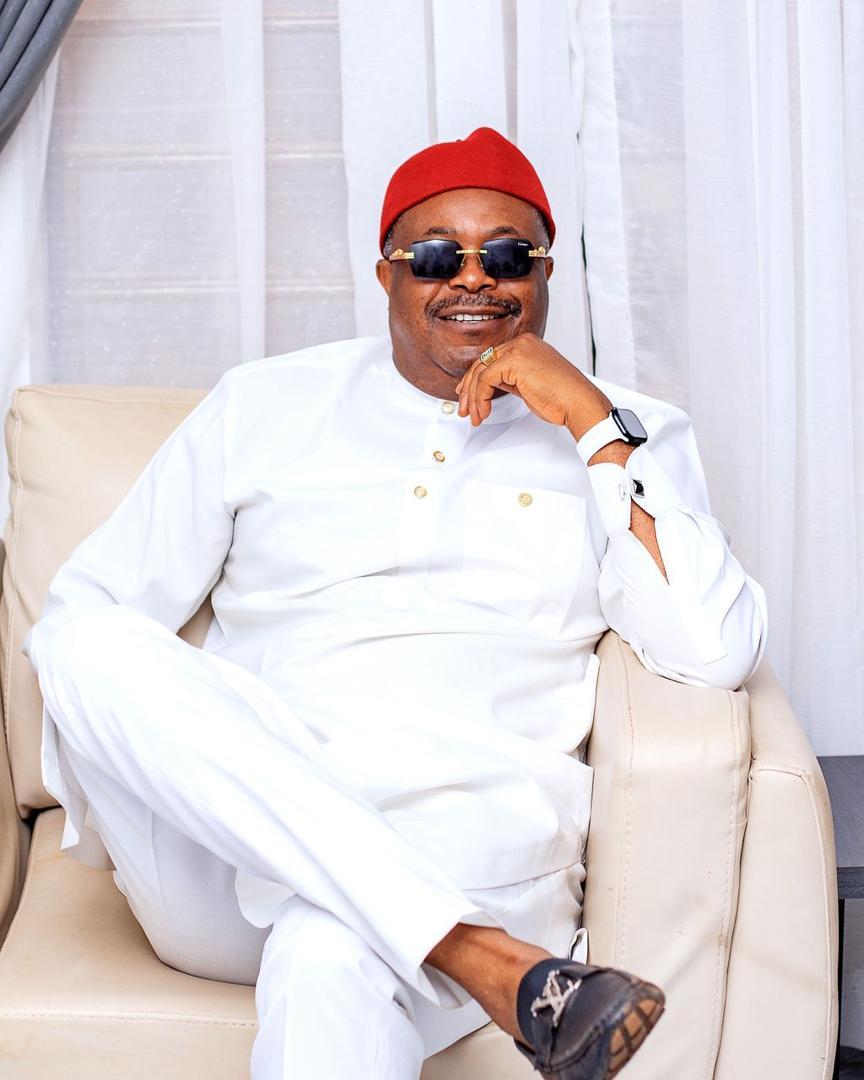
Chris Okobah PhD
Award wining author
Share this article if you believe that a new Nigeria is possible .
About the Author