By Odita Sunday
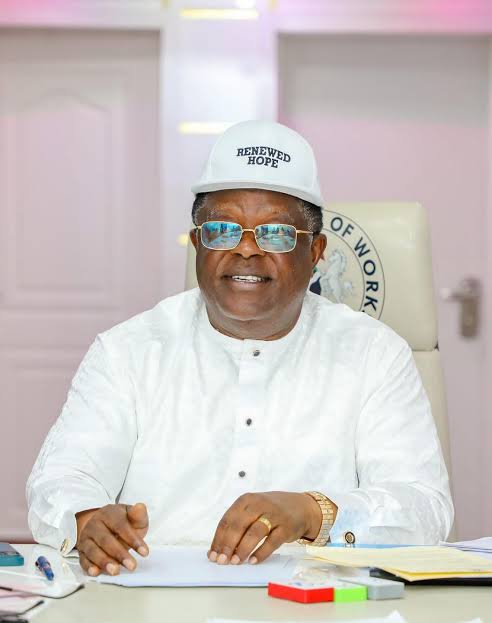
Minister of Works, Senator David Umahi, has dismissed suggestions that the Lagos-Calabar Coastal Highway may not extend beyond Epe, declaring that construction has already advanced beyond the Lagos axis and is progressing simultaneously across several states.
According to a statement issued on Thursday by the Senior Special Assistant to the Minister of Works on Media, Francis Nwaze,
Umahi made the clarification on Wednesday while inspecting Section 4B of the flagship highway project in Ondo State, saying the physical progress on the ground had effectively answered concerns earlier raised by former Cross River State Governor, Donald Duke, over the project’s feasibility.
Referring to Duke’s comments, the minister said the project had already gone beyond the stage critics predicted, stressing that work was actively ongoing in multiple locations.
“The Lagos-Calabar Coastal Highway is already on sail. We have sailed past Lagos that my brother Donald Duke talked about,” Umahi said.
He disclosed that construction is currently progressing on different sections of the highway, including 28 kilometres in Ogun State, 52 kilometres in Ondo State, 27 kilometres in Cross River State, about 47 kilometres in the first section of Akwa Ibom State, as well as the 180-kilometre dual carriageway section in Akwa Ibom, which he described as the longest stretch of the project.
According to the minister, several of the ongoing sections have already recorded over 60 per cent completion.
Umahi described the coastal highway as more than a road project, saying it is designed to stimulate economic growth, improve security, create jobs and unlock opportunities in agriculture, trade and education across the coastal corridor.
He said more than 1,000 workers have been directly employed on the Ondo section alone by HITECH Construction Company, while many others have secured indirect jobs through the project.
The minister also argued that construction activities have contributed to improved security in host communities through the deployment of security personnel and collaboration with local vigilante groups protecting the project corridor.
While acknowledging that public criticism is inevitable on projects of such magnitude, Umahi urged critics to provide practical alternatives rather than dismissing the initiative outright.
He reaffirmed President Bola Tinubu’s commitment to completing the highway, expressing confidence that the project would be delivered as promised.
Addressing allegations that the road alignment was altered to favour private estates, Umahi insisted the decision was based strictly on engineering realities and cost considerations.
He explained that the original coastal alignment encountered soil deposits reaching depths of about 50 metres, making construction technically challenging and significantly more expensive. In addition, he said the initial route would have required three major bridges of about 3.5 kilometres each across ocean channels.
According to him, the revised alignment followed President Tinubu’s directive to minimise crossings over large bodies of water while ensuring the project remained technically feasible without compromising quality.
Umahi also defended the project’s procurement process, describing it as transparent and economically prudent.
He revealed that representatives of Deutsche Bank, during discussions on financing the project’s first section, concluded that while the engineering design met high standards, the contract cost was actually undervalued.
According to him, the financing offer was eventually oversubscribed by about 100 million dollars.
The minister commended HITECH Construction Company for maintaining quality standards and fostering cordial relationships with host communities, describing the firm as a dependable partner in delivering one of Nigeria’s most ambitious infrastructure projects.
He expressed optimism that the Tinubu administration’s ongoing road infrastructure programme would provide durable highways capable of serving Nigerians for decades with minimal maintenance.
About the Author