
By Odita Sunday
Nigeria and Türkiye are set to deepen defence-industrial cooperation, with the Federal Government pushing for joint production, technology transfer, local manufacturing and skills development as part of efforts to build a self-reliant defence industry.
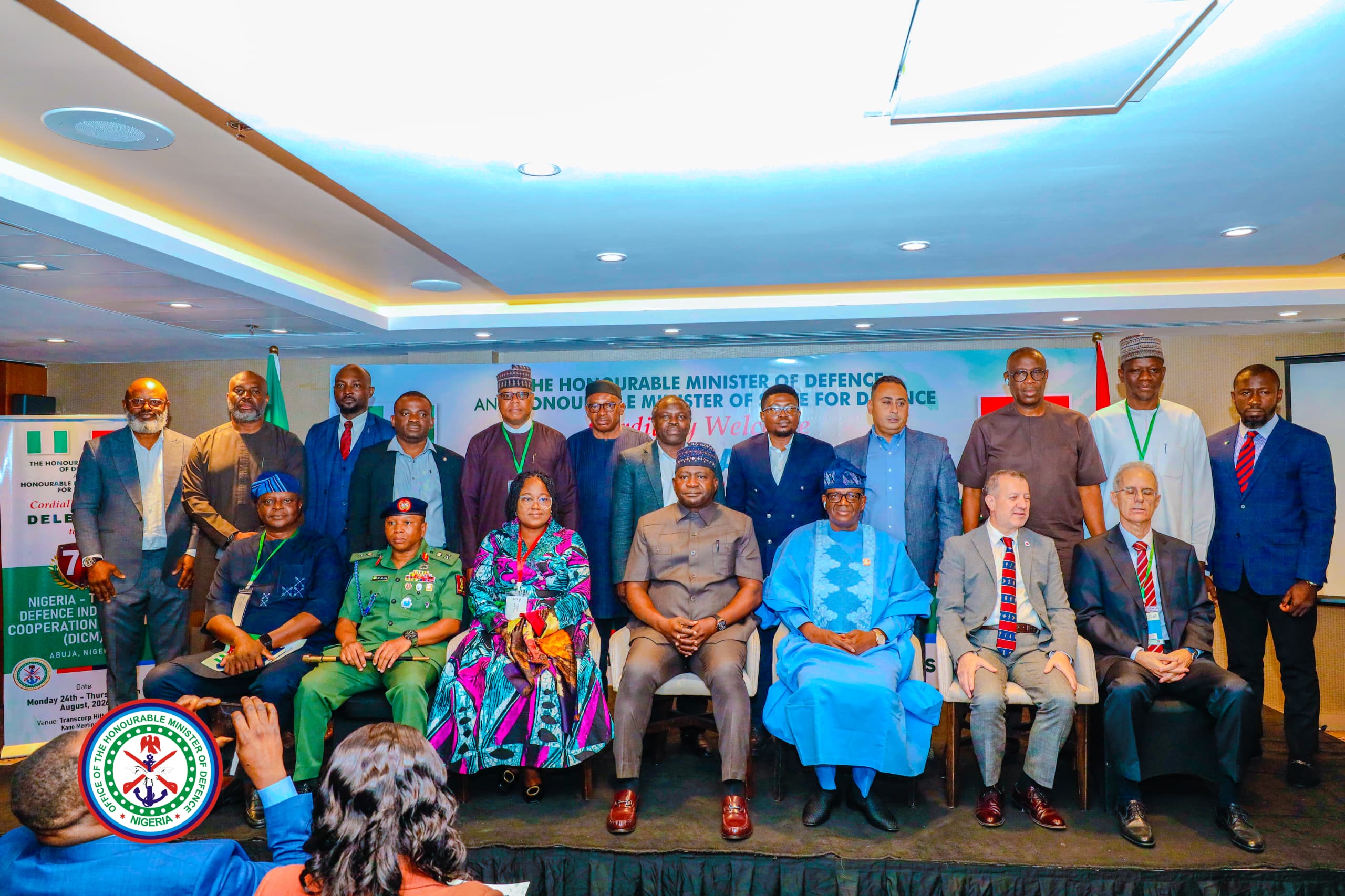
The Minister of Defence, General Christopher Gwabin Musa (rtd), made the position known on Wednesday at the 7th Nigeria–Türkiye Defence Industry Business Forum held at the Transcorp Hilton Hotel, Abuja.
Musa said Nigeria was no longer interested in a defence relationship driven largely by the acquisition of finished military equipment, stressing that the country wanted a more balanced partnership that would strengthen its domestic industrial and technological capabilities.
He said, “We must therefore progressively move beyond a predominantly buyer–seller relationship towards a more balanced and mutually beneficial partnership founded on joint production, local manufacturing, technology transfer, research and development, maintenance, repair and overhaul, skills development and sustainable industrial cooperation.”
According to him, Nigeria attaches great importance to its defence relationship with Türkiye, which has evolved from conventional military-to-military engagements to cooperation in equipment acquisition, training, technical assistance and defence industry development.
The Minister said the current forum offered both countries an opportunity to translate years of bilateral relations into practical industrial partnerships, sustainable investments and enduring defence capabilities.
He noted that the Federal Government was committed to developing a strong, self-reliant and globally competitive defence industrial base, with the Defence Industries Corporation of Nigeria (DICON) Act 2023 providing the legal and institutional framework for achieving the objective.
Musa said the ambition was not merely to satisfy Nigeria’s immediate military requirements but to develop an industrial ecosystem capable of positioning the country as a competitive defence manufacturing hub in Africa.
Such a development, he said, would create quality employment, produce highly skilled Nigerian professionals, strengthen domestic supply chains and promote innovation while contributing to national security and economic growth.
The Minister said the rapidly changing nature of warfare had made indigenous technological capacity more urgent, citing the growing importance of unmanned systems, artificial intelligence, advanced communications, cyber capabilities, precision systems, surveillance technologies and space-based assets.
“Contemporary conflicts are demonstrating the growing importance of unmanned systems, artificial intelligence, advanced communications, cyber capabilities, precision systems, surveillance technologies, space-based assets and other emerging technologies,” he said.
He stressed that Nigeria must develop the capacity not only to acquire such technologies but also to understand, adapt, manufacture, maintain and continuously improve them.
Musa identified Türkiye’s transformation into a major and increasingly self-reliant defence industrial power as a model from which Nigeria could draw useful lessons.
He said Türkiye had achieved significant progress through sustained government commitment, investment in research and development, innovation, private-sector participation and close collaboration among government, the armed forces, research institutions and industry.
“Nigeria therefore views the Turkish defence industry not merely as a source of equipment, but as a strategic partner in our defence industrialisation journey,” he said.
The Minister further said Nigeria’s strategic location, large domestic market, growing economy and human capital could provide the foundation for partnerships capable of serving not only both countries but also the wider African market.
He urged Nigerian and Turkish defence companies to move beyond general expressions of interest and develop concrete partnerships with clearly defined objectives, timelines, investment commitments, production arrangements and measurable outcomes.
He assured Turkish investors that Nigeria was open to credible and responsible defence-industrial partnerships covering joint ventures, co-production, technology licensing and transfer, local manufacturing and assembly, component production, maintenance, repair and overhaul, research and development and human-capacity development.
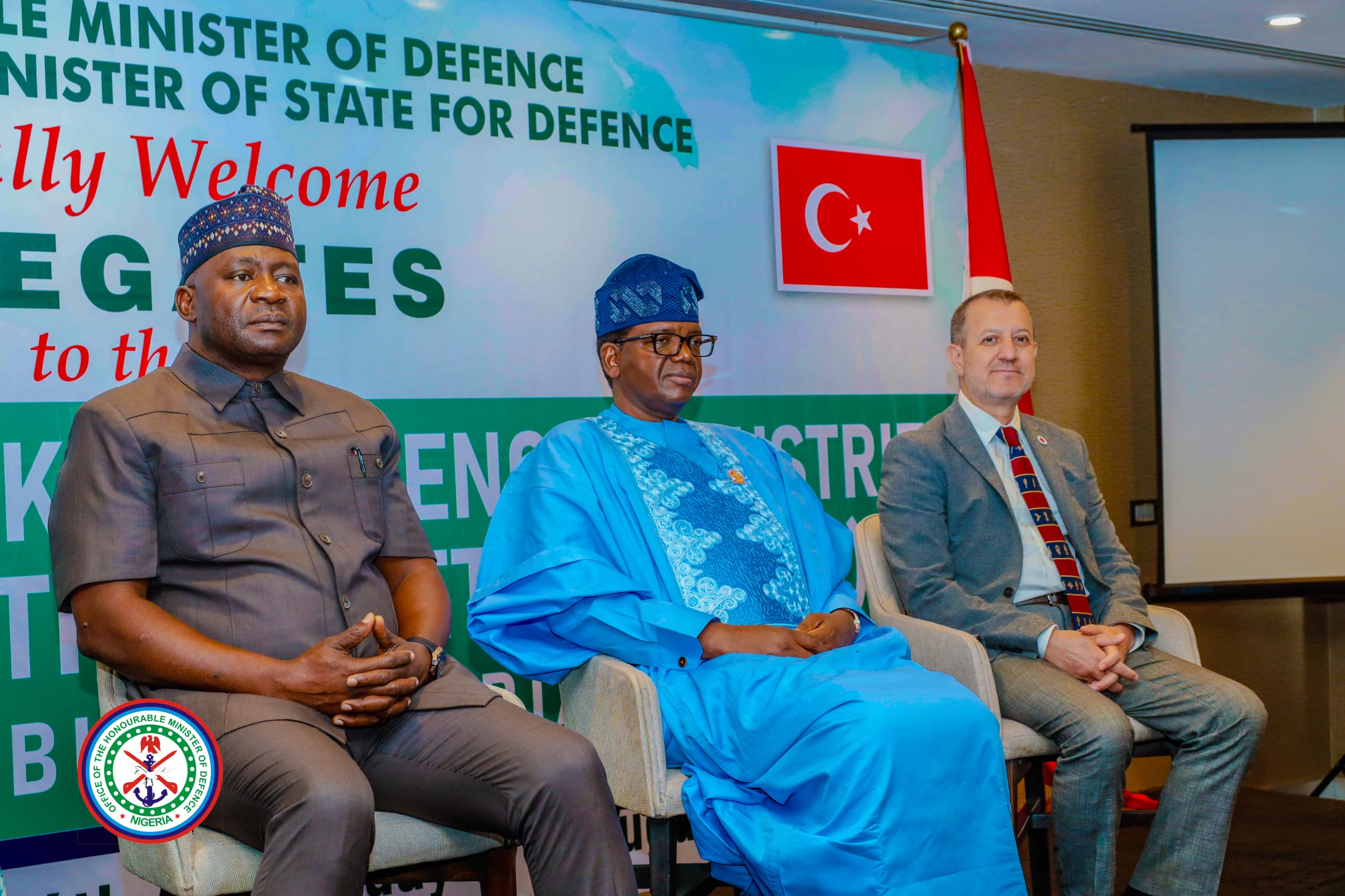
Musa particularly emphasised technology transfer and local capacity development, saying the success of any partnership should not be measured simply by the delivery of military platforms or systems.
“The ultimate measure of success should not simply be the delivery of a platform or system, but the extent to which Nigerian personnel, institutions and industries acquire the knowledge and capabilities to sustain and further develop that capability,” he said.
The Minister said sustainable partnerships must also be built on mutual respect, transparency, trust, protection of intellectual property and responsible technology transfer.
He expressed confidence that the forum would produce concrete outcomes and complement the work of the Nigeria–Türkiye Defence Industries Cooperation Committee.
Also speaking, the Defence Industries Corporation of Nigeria (DICON) said the Nigeria–Türkiye partnership should be used to build Nigeria’s capacity to produce, sustain, repair, adapt and innovate rather than remain focused on equipment procurement.
DICON, in its goodwill message at the Nigeria–Türkiye Staff Talks, said recent global security developments had reinforced the lesson that a country’s defence strength was increasingly determined by its ability to sustain and develop its own military capabilities.
The Corporation said the Federal Government, under President Bola Ahmed Tinubu, was repositioning DICON as a strategic instrument for defence industrialisation, with renewed government support and the DICON Act 2023 enabling a broader focus on innovation, research, private-sector participation, technology transfer and indigenous manufacturing.
It said cooperation with Türkiye presented opportunities to combine Turkish experience and technology with Nigeria’s market, human capital and industrial potential.
DICON stressed that the outcome of the Staff Talks must go beyond communiqués and expressions of goodwill.
“The real value lies in building productive partnerships that combine Turkish experience and technology with Nigeria’s market, human capital and industrial potential,” it said.
The Corporation called for actionable programmes, identifiable projects, technology partnerships, production lines, maintenance capabilities and skills-development initiatives.
It said the ultimate goal should be to establish defence production resilience that would enable Nigeria to increasingly meet its defence requirements, withstand disruptions in external supply chains and progressively develop indigenous technological and industrial capabilities.
“Let these Staff Talks, therefore, mark not just another meeting between two friendly nations, but another step towards building, producing and innovating together,” DICON said.
The Corporation reaffirmed its readiness to serve as a platform linking government, the Armed Forces, industry, innovators and international partners in advancing Nigeria’s defence-industrial ambitions.
The forum is expected to provide opportunities for Nigerian and Turkish companies to identify capability gaps, match them with available technologies and expertise, and establish commercially viable partnerships that could translate into investment, local production, technology transfer and skills development.
Nigeria and Türkiye have maintained longstanding bilateral defence relations, and the latest engagements are expected to give the partnership a stronger economic, technological and industrial dimension.
About the Author