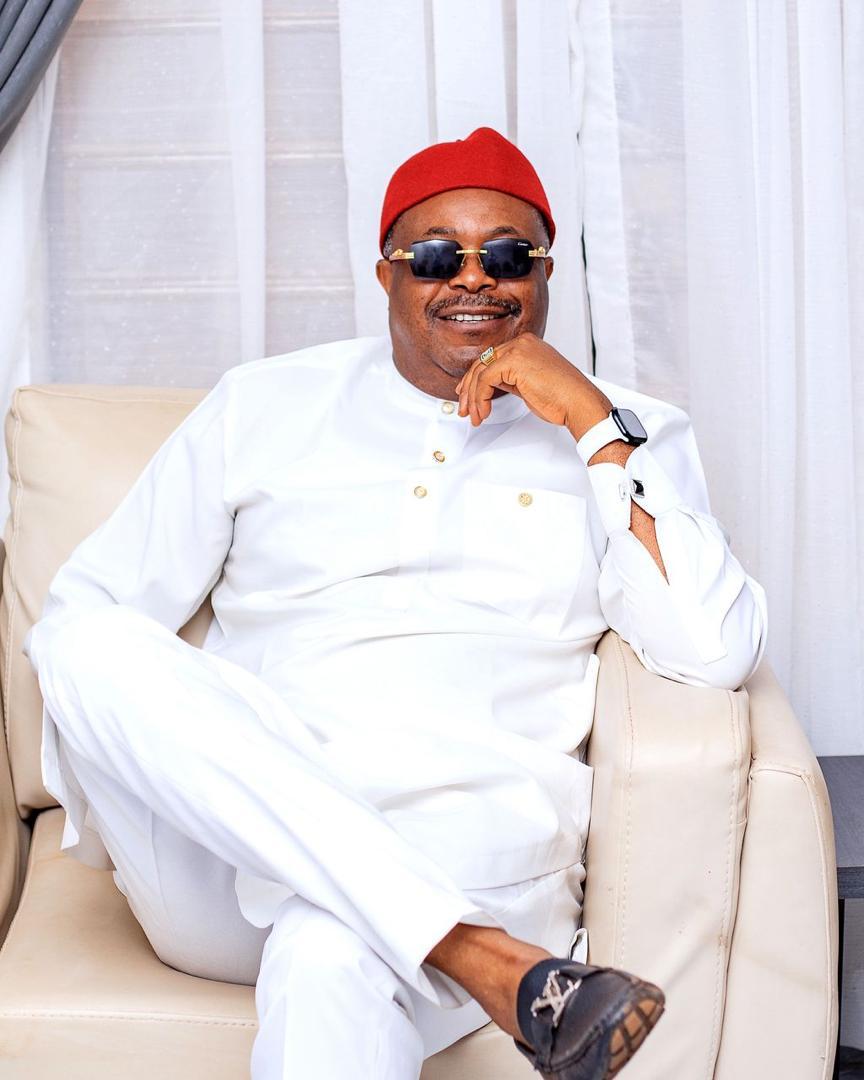
An Evidence-Based Assessment of Governor Sheriff Oborevwori’s Record
Any serious assessment of Governor Sheriff Oborevwori should avoid two extremes: pretending that nothing has been achieved, or presenting every commissioned road and political slogan as proof that Delta State has reached its developmental potential. The more compelling criticism is that a state with Delta’s extraordinary revenues, oil wealth and human resources should be producing substantially greater improvements in the everyday lives of its citizens.
First, an important correction about the Tinubu statement
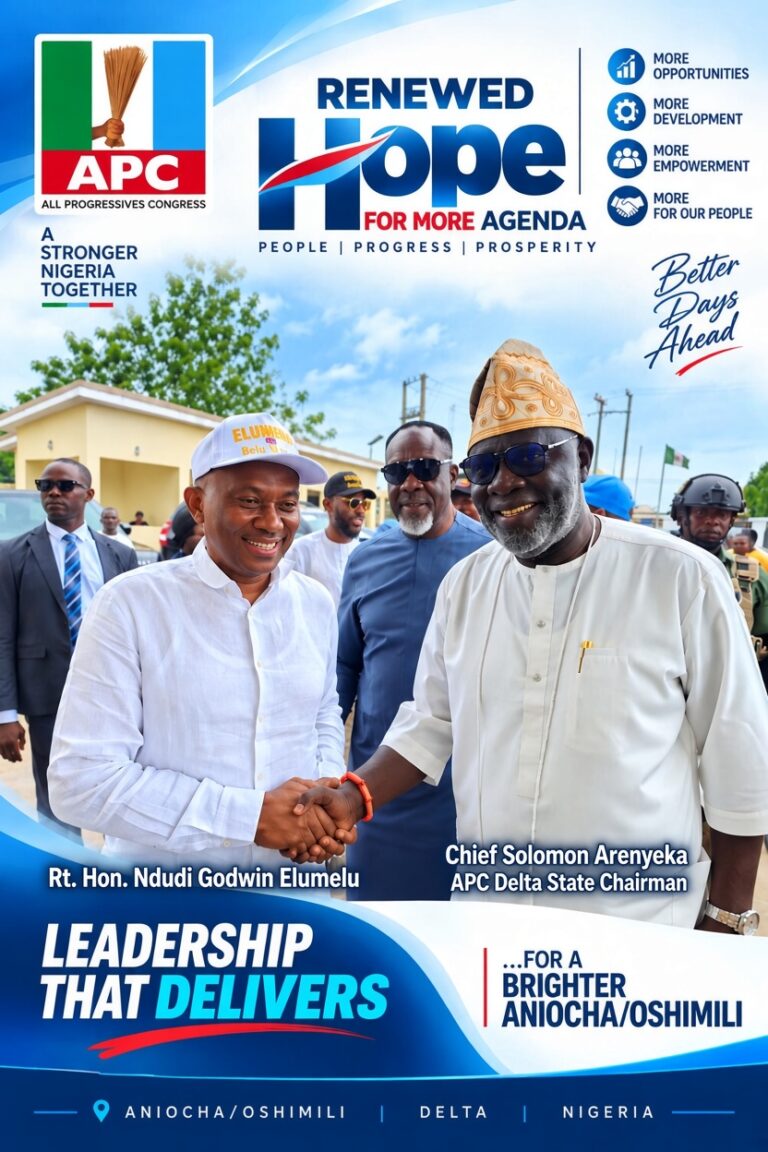
It is accurate to say that Oborevwori expressly stated that he “does not care about Delta people” that “Delta people are not his priority.”He actually said in June 2026 that President Bola Tinubu’s re-election was his “number one political project.” He went further to describe that political project as bigger than any other project .
That distinction matters. That statement is legitimately open to very strong criticism.
A governor was elected principally to make the welfare, security and development of his state his overriding governmental project. When citizens are confronting bad roads, insecurity, struggling schools, unemployment, flooding and inadequate public services, declaring the re-election of another politician your “number one project” is not only stupid, but sends a deeply troubling message about priorities. Political loyalty may be legitimate; it should never appear superior to the constitutional and moral obligation to the people whose mandate put the governor in office.
Delta—not Tinubu, APC, PDP or any politician—should be the governor’s number one project.
Delta people should be Oborevworis legitimate claim as achievements and not another politician, but maybe because he is the product of political godfather and appreciates god fathers more than the citizens.
His government has not undertaken substantial road and infrastructure works. At his second anniversary, the government listed 42 projects for inauguration, including sections of the Ughelli–Asaba dual carriageway, bridges and urban roads with all the projects more of wishy washy than any thing long and lasting . His administration also reports recruitment of 3,497 primary-school teachers and continuing investment in schools , all are claimes not supported by evidence.
His fiscal record also does not require acknowledgement because there is nothing to support his spurious claims . From my personal perspective, I don’t agree with BudgIT ranking Delta 6th of 35 states for overall fiscal performance and 2nd for debt sustainability in its 2025 State of States assessment. Reports claim Delta’s IGR rose to about ₦164.6 billion in 2024. DMO data show domestic debt of approximately ₦213.85 billion in March 2026, compared with about ₦304.25 billion at the end of 2022—a claim of reduction of roughly 30%.
Those were supposed to be meaningful achievements if they were actually true . But they do not end the debate. They actually sharpen the central question: given the resources available to Delta, are citizens receiving development proportionate to the money?
Where the administration remains vulnerable to serious criticism
Infrastructure remains uneven. Despite large numbers of announced projects, residents still report badly deteriorated roads even within the state capital. In November 2025, motorists complained that failed internal roads in Asaba were damaging businesses and becoming difficult to use during rainfall. Development cannot be measured principally by the number of contracts awarded or roads commissioned; it must be measured by connectivity, durability, travel time and economic productivity across all 25 LGAs.
Education presents a disturbing contradiction. The government claims to have recruited teachers and undertaken educational projects, yet an FIJ investigation documented severely deteriorated conditions at Government Model Secondary School in Asaba—only minutes from Government House—with broken furniture, missing windows and doors and neglected surroundings. One school does not prove statewide educational collapse, but its location makes the symbolism powerful: if such neglect can survive almost beside the seat of government, what conditions exist in less visible rural communities?
Security remains a major developmental burden. Data reproduced by the European Union Agency for Asylum from ACLED recorded 211 security incidents and 217 fatalities in Delta between January 2024 and August 2025, with incidents reported in 24 of the state’s 25 LGAs. Kidnapping, criminal violence, communal disputes and cult-related violence were among the identified problems. The governor himself convened a security summit in June 2026 specifically addressing terrorism, kidnapping and criminality, even though the meeting was more of political theatrics, just a hollow chamber . Holding a summit is positive; the ultimate test is whether residents can travel, farm, invest and live without fear.
Economic diversification remains inadequate. This is one of the administration’s greatest structural weaknesses. BudgIT found that Delta’s 2024 FAAC dependence ratio was approximately 87.9%, despite being one of Nigeria’s richest oil-producing states. BudgIT specifically observed that Delta could do more to convert its enormous oil receipts into growth in other sectors. A wealthy oil-producing state should be building a powerful non-oil economy around agriculture, manufacturing, logistics, technology, tourism, petrochemicals and SMEs. Continued overwhelming dependence on Abuja and oil revenue is not sustainable development.
Job creation must be measured by outcomes rather than empowerment ceremonies. The administration’s own policy documents promise that employment will be central to government policy. The appropriate questions therefore are: How many permanent private-sector jobs have been created? How many significant industries have opened? How much private capital has entered Delta? How many young people have moved from dependency into productive employment? These figures should be regularly published and independently verifiable.
Healthcare should be judged beyond buildings. The administration reports rehabilitation and upgrading of primary healthcare centres and hospitals. This is another spurious claim by the government propaganda machine because it is not true . Genuine health-sector performance is measured by functioning equipment, doctors and nurses on duty, medicine availability, maternal and infant mortality, emergency response, functioning rural primarily health care centers , affordable access—Renovated rural health centers. Government should publish those outcome indicators so citizens can determine whether expenditure is translating into healthier lives.
Flooding, drainage and environmental management remain unfinished business. Even reports favourable to the administration acknowledge the historic problems of flooding, damaged roads and infrastructural deterioration in Asaba and other areas, Asaba the capital and other areas in the state are suffering from major stormwater devastation. The government should focus on solving these problems rather than focusing on on the political survival of another politician, diverting the state resources to the reelection of President Bola Ahmed Tinubu instead of improving the state, these has become the norm for Corrupt Nigerian Governors, let Oborevwori first and foremost save himself politically, else he is going to end up in prison in a New Nigeria, mark my words.
Success should only be declared when communities that repeatedly flood actually stop flooding.
The greatest missed opportunity may be the difference between revenue and transformation. Delta has enjoyed extraordinary fiscal inflows. BudgIT recorded gross FAAC inflows of about ₦1.19 trillion in 2024, alongside rising IGR. With resources of that magnitude, citizens are entitled to expect more than scattered projects. They should expect first-class roads, functional schools and hospitals, reliable water, modern cities, industrial estates, agricultural processing centres, security technology and an economy capable of employing its young people.
The political problem with making Tinubu the “number one project”
This is where Oborevwori displayed stupidity of the highest level, it is a very damaging leadership statement.
Tinubu has his own mandate. He has ministers, advisers, APC structures and a national campaign organisation. Delta’s governor has one state and millions of citizens who entrusted him with their welfare.
A teacher standing before children in a dilapidated classroom does not need the governor’s number-one project to be a presidential campaign.
A motorist struggling through a collapsed road does not need it.
A farmer afraid of kidnapping does not need it.
A graduate without employment does not need it.
A patient in an inadequately equipped hospital does not need it.
They need the Governor of Delta State to make Delta State his number-one project.
There is nothing wrong with supporting a president politically. What becomes objectionable is when partisan ambition and reckless ignorance and political incompetence is rhetorically elevated above the sacred responsibility of governance. Public office is not primarily an instrument for delivering politicians to office; it is an instrument for delivering development to people.
The verdict
Governor Oborevwori cannot fairly be described as having achieved so much . Roads have been neglected , projects uncompleted, schools without teachers, debt climbing like mountain Kilimanjaro and fiscal performance has dropped just like under his predecessor who fleeced the state. The evidence establishes that much.
The governor relies heavily on election rigging machines and is therefore very complacent .
Delta’s real benchmark should not be whether Oborevwori has performed better than a previous governor. The benchmark should be what a resource-rich state receiving enormous revenues ought to look like after decades of oil wealth.
By that standard, the unfinished work is enormous: infrastructure, security, educational quality, healthcare outcomes, industrialisation, employment, agriculture, power, drainage, economic diversification and the conversion of public revenue into visible improvements in ordinary people’s lives.
And therefore the message to the governor should be simple:
Mr Governor, Bola Ahmed Tinubu may be your number-one political project. But the people of Delta State elected you for a greater project—Delta State itself. No president, party, election or political ambition should ever rank above that responsibility.
A governor’s greatest endorsement should not be the politician he delivers at the next election, but the state he leaves better than he found it.
President Bola Ahmed Tinubu should be delivered by his own accomplishment and not yours
Chris Okobah PhD
Award winning author
About the Author