
By Maryam Aminu
A message from a friend asking for urgent financial help could be a scam, the Nigeria Police Force National Cybercrime Center (NPF-NCCC) has warned, urging Nigerians to verify suspicious online requests before sending money or sharing personal information.
The centre said cybercriminals were impersonating individuals, public officials and organisations to trick unsuspecting people into transferring funds or revealing sensitive details.
According to the NPF-NCCC, fraudsters often create fake social media accounts or take control of existing ones, using their victims’ names, photographs and personal information to appear credible.
They then contact friends, relatives, colleagues or business associates with urgent appeals for financial assistance, investment offers or supposed business transactions.
Some criminals also pose as officials of financial institutions or law enforcement agencies to obtain banking details, passwords, personal identification numbers (PINs) and one-time passwords (OTPs).
The Assistant Inspector-General of Police NPF-NCCC, AIG Akaninyene Ezima, mnips, advised Nigerians to be cautious when responding to unexpected messages, calls or online requests, particularly those involving money.
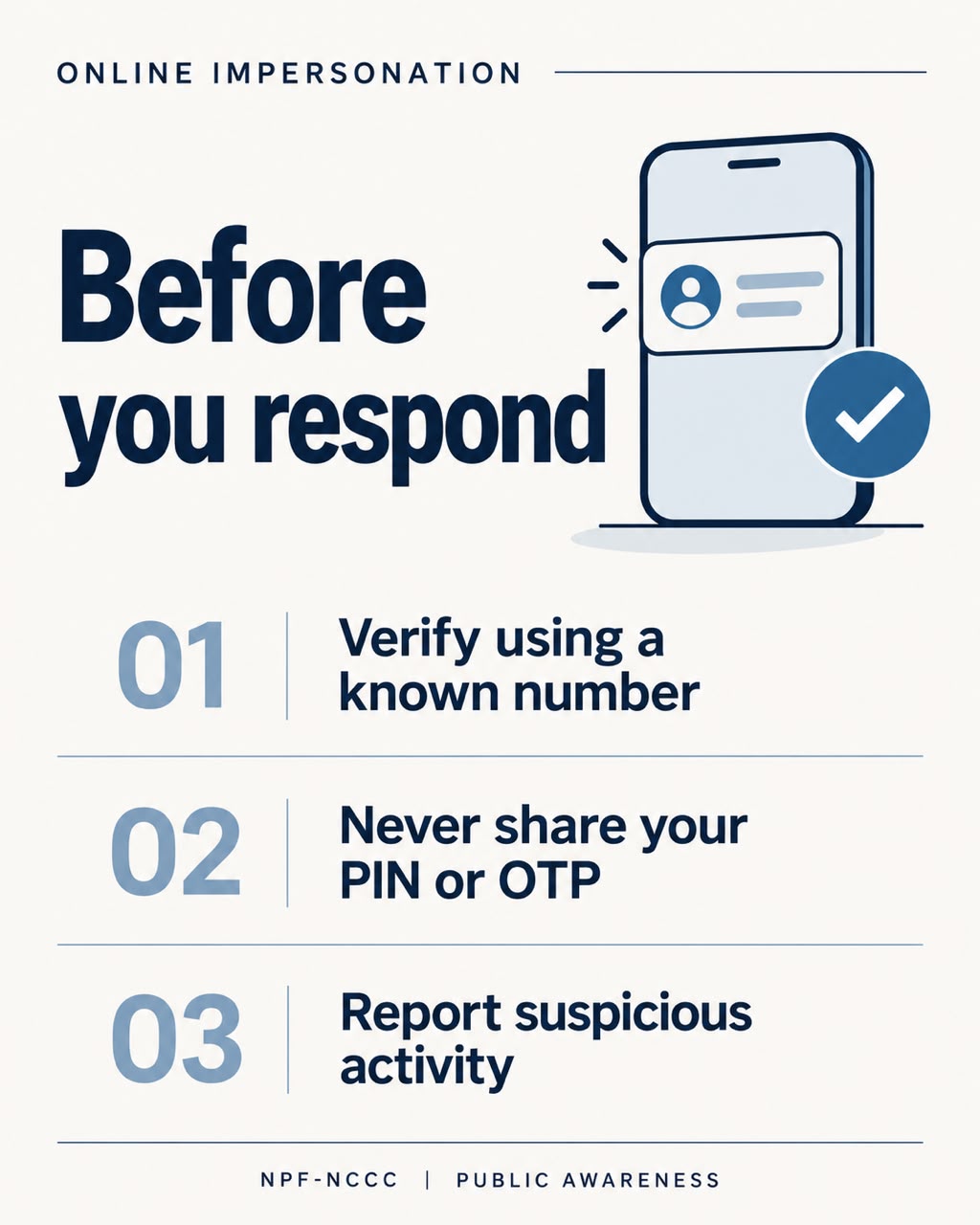
He urged members of the public to confirm such requests directly with the person or organisation concerned, using a known telephone number or another trusted communication channel, rather than relying on the contact details provided in a suspicious message.
The centre according to a statement issued by DSP Unwana Imah, Public Relations Liaison Officer, Nigeria Police Force National Cybercrime Center, Abuja, also warned Nigerians never to disclose their passwords, PINs or OTPs to anyone, regardless of how convincing the person’s claims may sound.
The NPF-NCCC advised anyone who suspects that their social media account has been compromised to secure the account immediately and alert friends, relatives and other contacts who could be targeted by the fraudster.
Victims were also encouraged to report compromised accounts through the relevant social media platform.
For those who have already transferred money to suspected scammers, the centre advised contacting their financial institutions immediately and reporting the incident to the nearest police station or the NPF-NCCC.
It urged victims to preserve evidence that could assist investigations, including suspicious messages, telephone numbers, transaction receipts and relevant account details.
The centre reaffirmed its commitment to tackling cybercrime through intelligence-led investigations, collaboration with relevant stakeholders and continued public awareness campaigns.
It urged Nigerians to remain vigilant as they use digital platforms, noting that verifying a person’s identity before acting on a financial request could help prevent avoidable losses.
About the Author