By Odita Sunday
The Nigerian military and the United Nations Office for the Coordination of Humanitarian Affairs (UN OCHA) have renewed their commitment to strengthening civilian protection and expanding humanitarian access in Nigeria’s conflict-affected North-East, as security forces intensify efforts to stabilise communities recovering from years of insurgency.
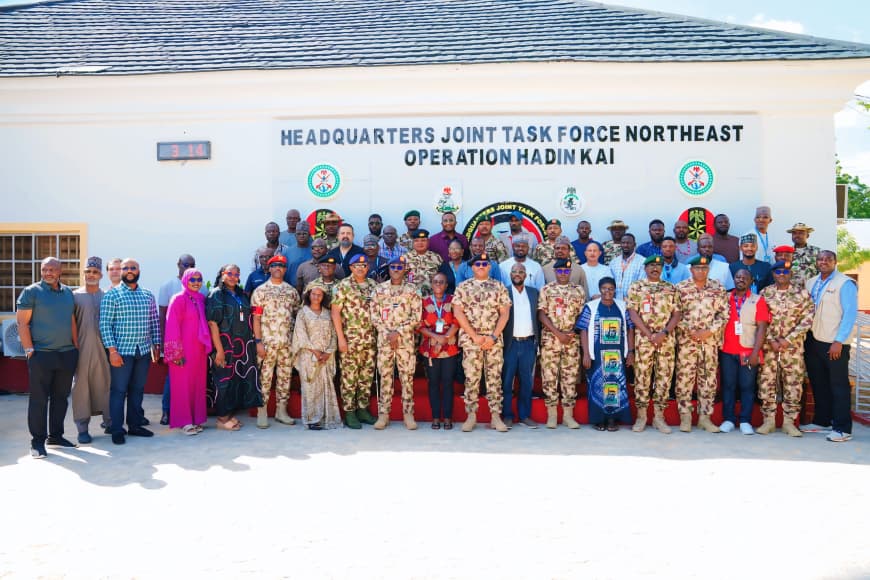
The renewed collaboration was reaffirmed on Thursday during a Humanitarian/Civil-Military Coordination Roundtable jointly convened by Headquarters Joint Task Force (North East), Operation HADIN KAI, and UN OCHA in Maiduguri. The meeting brought together officials of the Borno State Government, humanitarian organisations and other key stakeholders to review existing partnerships and address challenges affecting relief operations across Borno, Adamawa and Yobe states.
Co-chairing the session were the Theatre Commander of Operation HADIN KAI, Major General Abdulsalam Abubakar, and UN OCHA’s Deputy Head of Office for North-East Nigeria, Patricia Mucheche.
Speaking at the event, Major General Abubakar described the meeting as a timely intervention to deepen cooperation between the military and humanitarian actors, noting that it was the first such engagement in four years.
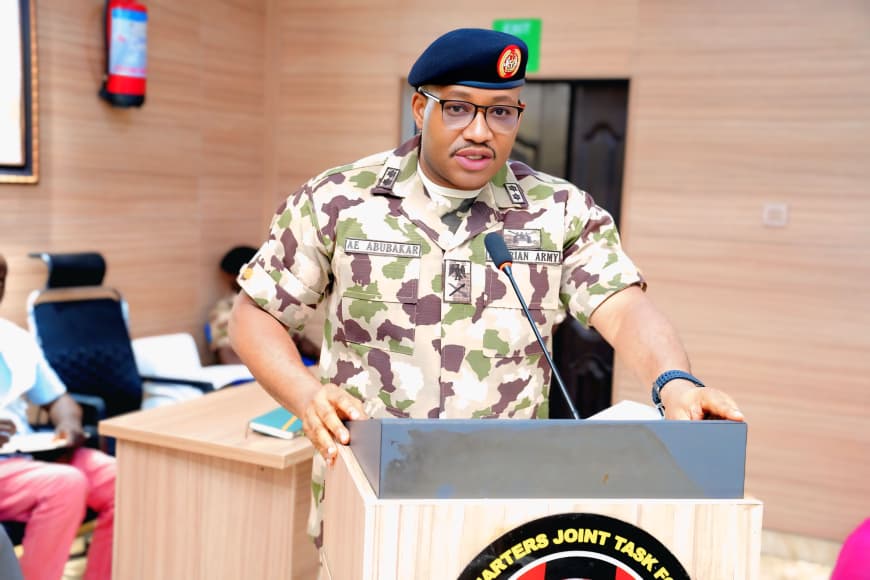
He said the roundtable aligns with the directive of the Chief of Army Staff, Lieutenant General Waidi Shaibu, to reinforce the Armed Forces’ humanitarian support efforts alongside ongoing counter-insurgency operations.
According to him, although military operations have continued to weaken the operational capabilities of terrorist groups, achieving lasting peace requires sustained collaboration with humanitarian organisations to protect civilians, facilitate the safe return of displaced persons and restore livelihoods in affected communities.
The Theatre Commander identified the protection of humanitarian supply routes, safety of relocated internally displaced persons (IDPs), security for farming communities and stronger civil-military relations as critical areas requiring closer collaboration.
He also acknowledged challenges confronting humanitarian operations, including threats posed by improvised explosive devices (IEDs), access restrictions in some locations, security concerns affecting aid workers and persistent funding constraints.
Abubakar commended UN OCHA, the International Committee of the Red Cross (ICRC) and other humanitarian partners for their continued support to conflict-affected communities and for contributing to the capacity development of Operation HADIN KAI personnel.
The Chief of Army Staff, Lieutenant General Shaibu, in a message referenced during the engagement, reiterated the Nigerian Army’s commitment to providing adequate security for humanitarian personnel, relief materials and critical supplies moving through operational corridors in the North-East.
He stressed that ensuring safe humanitarian access remains essential to protecting civilians, supporting stabilisation efforts and creating conditions for the voluntary and dignified return of displaced persons. He also called for stronger operational coordination, enhanced convoy protection and improved logistics planning between the military and humanitarian organisations.
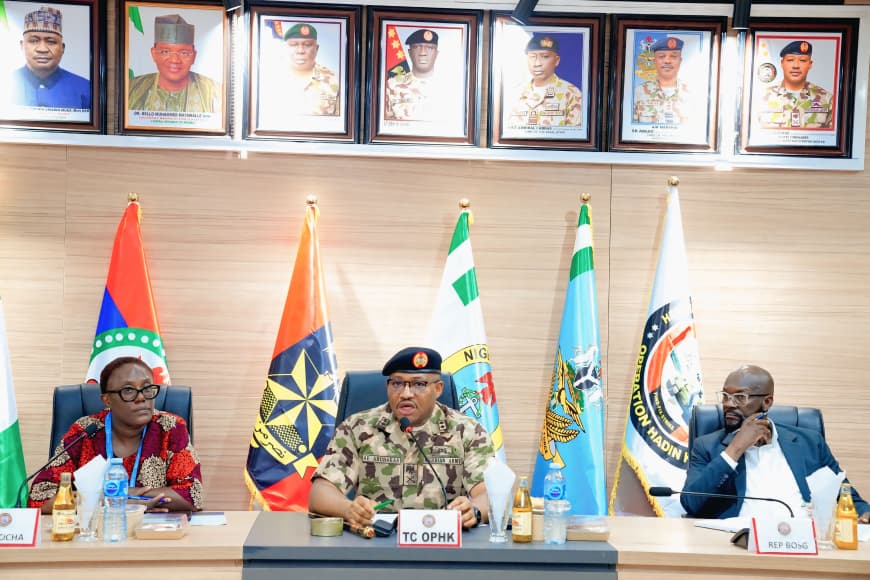
In her remarks, Mucheche said collaboration between humanitarian agencies and the military remains vital to delivering life-saving assistance to vulnerable populations across the region.
She described the roundtable as an important platform for addressing operational challenges and improving humanitarian response, while calling for increased security patrols along major supply routes and stronger measures to protect communities receiving returning displaced persons.
Mucheche also highlighted the continued threat posed by unexploded ordnance, warning that it remains a major risk to civilians and humanitarian workers operating in former conflict zones.
Closing the meeting, the Deputy Theatre Commander of Operation HADIN KAI, Air Vice Marshal OF Akinboyewa, said sustained military operations against Jama’atu Ahlis Sunna Lidda’awati wal-Jihad (JAS) and the Islamic State West Africa Province (ISWAP) have continued to create safer conditions for humanitarian activities and community recovery.
He maintained that the success of military operations should ultimately be measured by the ability of citizens to live safely, move freely and rebuild their livelihoods without fear.
Akinboyewa reaffirmed Operation HADIN KAI’s commitment to securing critical routes and population centres, protecting civilian livelihoods, strengthening accountability within security structures and sustaining effective coordination with humanitarian partners.
He assured stakeholders that recommendations from the roundtable would be implemented, expressing confidence that stronger collaboration would accelerate the transition from emergency humanitarian assistance to long-term recovery, resilience and sustainable development across the North-East.
About the Author